Physics-Based Diagnosis Model and Digital Twin Simulation for Space Habitats
Research on virtual assistants (VA) for spacecraft anomaly treatment during long duration exploration missions
Supported by NASA's Human Research Program (Grant #80NSSC19K0656) and NASA STTR Phase II (Award #80NSSC24CA028, with TRACLabs)
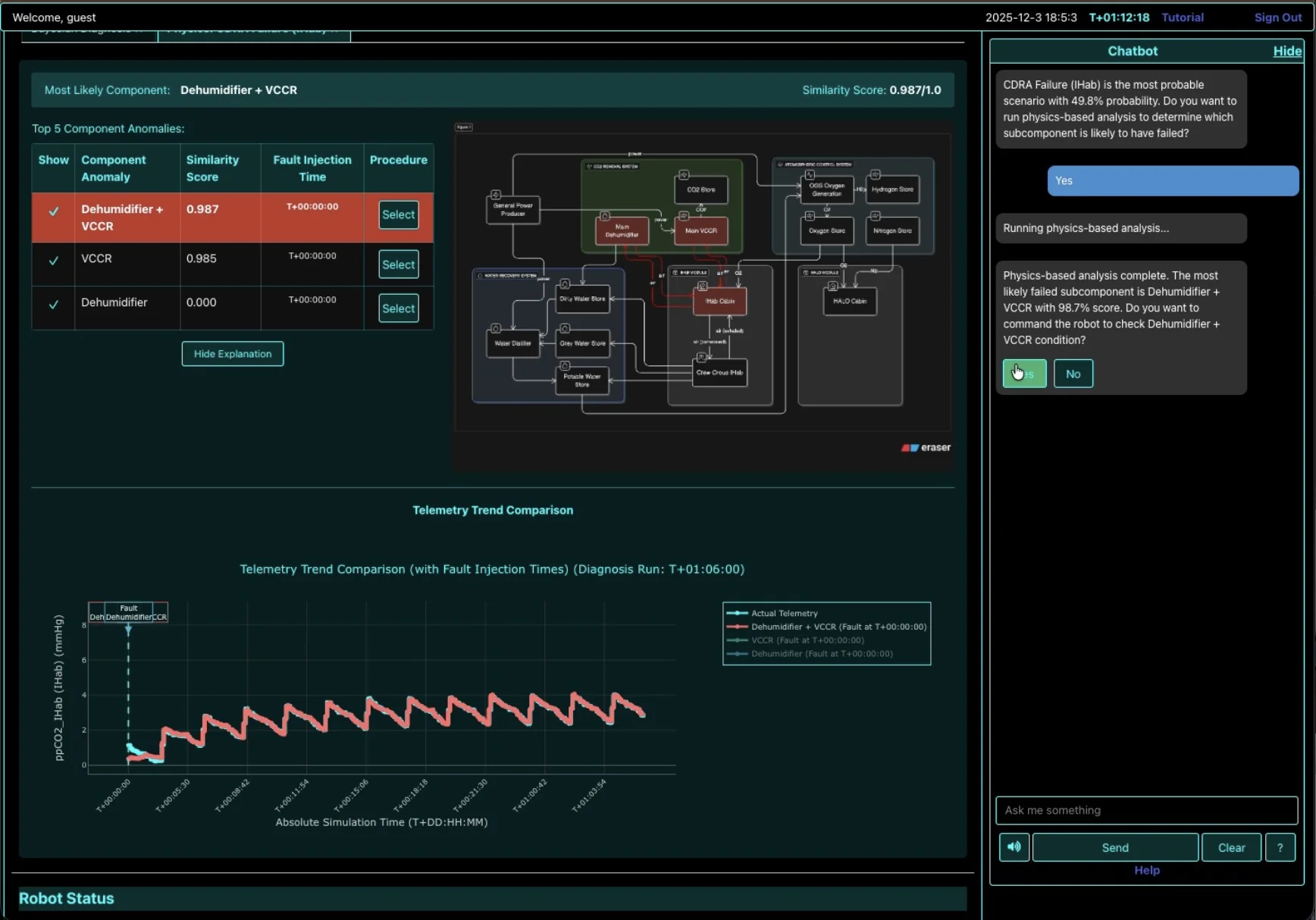
Contribution: Developing a physics-based anomaly diagnosis capability for Daphne-AT, a prototype VA, using hybrid model-based reasoning and simulation-based fault trend analysis with real-time telemetry.
Current Research
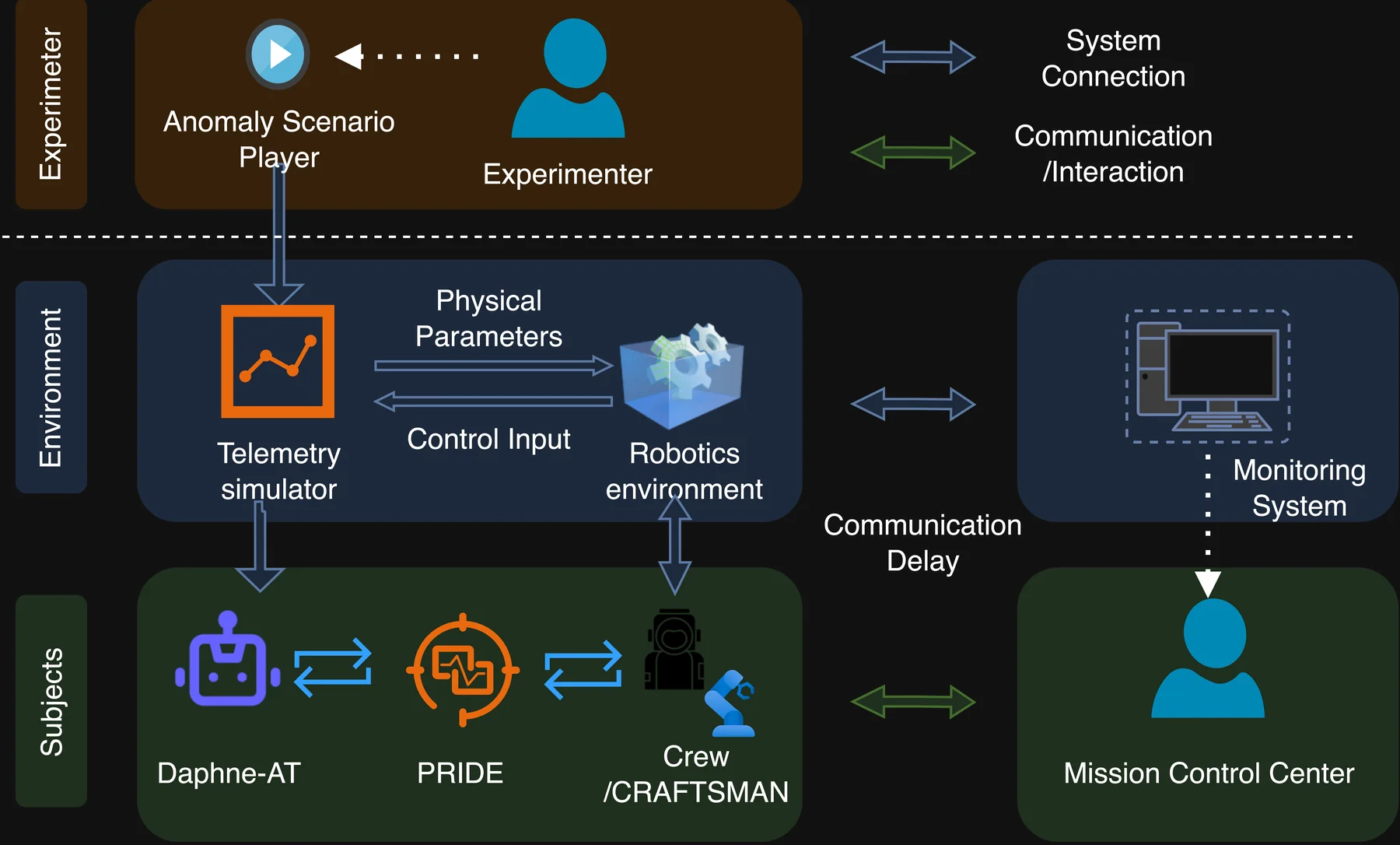
Development of a Physics-Based Diagnosis Model and Digital Twin Simulation of a Space Habitat for End-To-End Autonomous Anomaly Resolution
Abstract: Astronauts in deep space exploration missions will experience long communication delays with mission control. In such environments, spacecraft anomalies or unexpected sudden environmental changes can occur, some of which could lead to loss of the mission or loss of life in a short period of time. Virtual Assistants (VAs) that can seamlessly retrieve information from several heterogeneous data sources and combine it to produce natural language answers are a promising technology to support astronauts during these situations.
Daphne-AT was developed to study the impact of such VAs on human performance and has been used for several laboratory and analog studies. This poster describes the ongoing development of a physics-based reasoning capability in Daphne-AT. A real-time telemetry data feed can be assimilated into the physics-based model to produce a digital twin of the habitat, significantly improving anomaly detection and diagnosis capabilities.
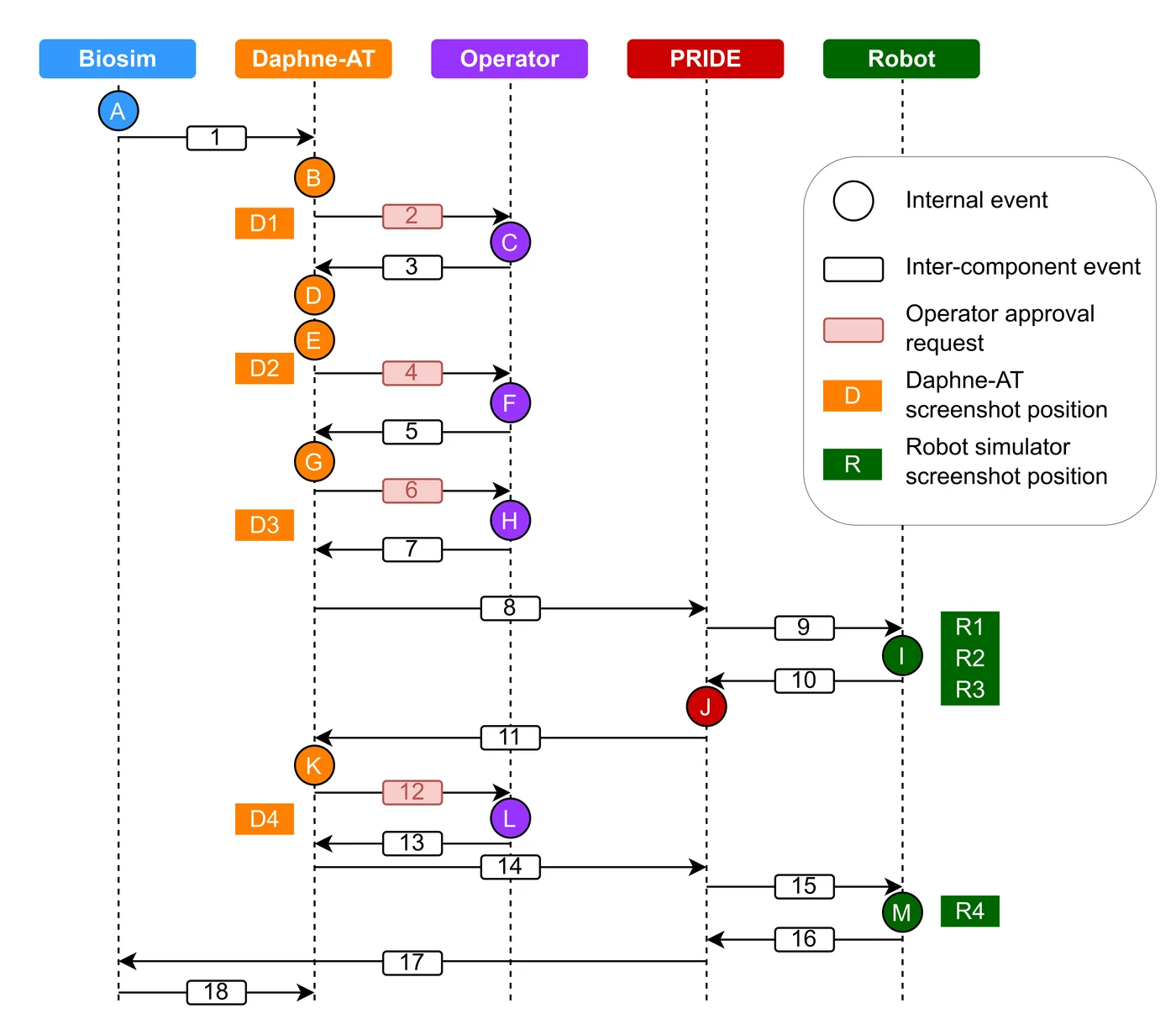
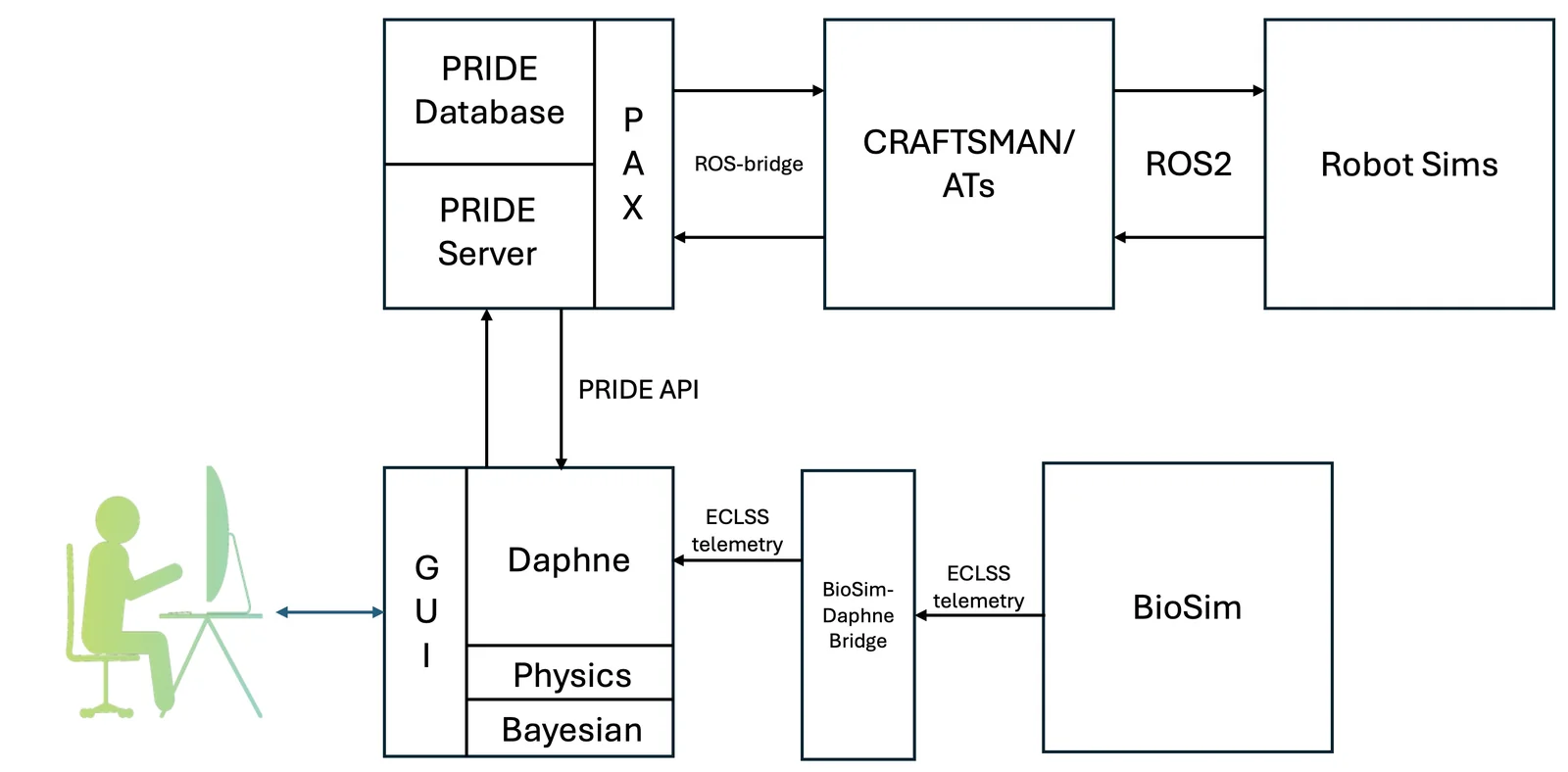
The integrated loop demonstrated end to end
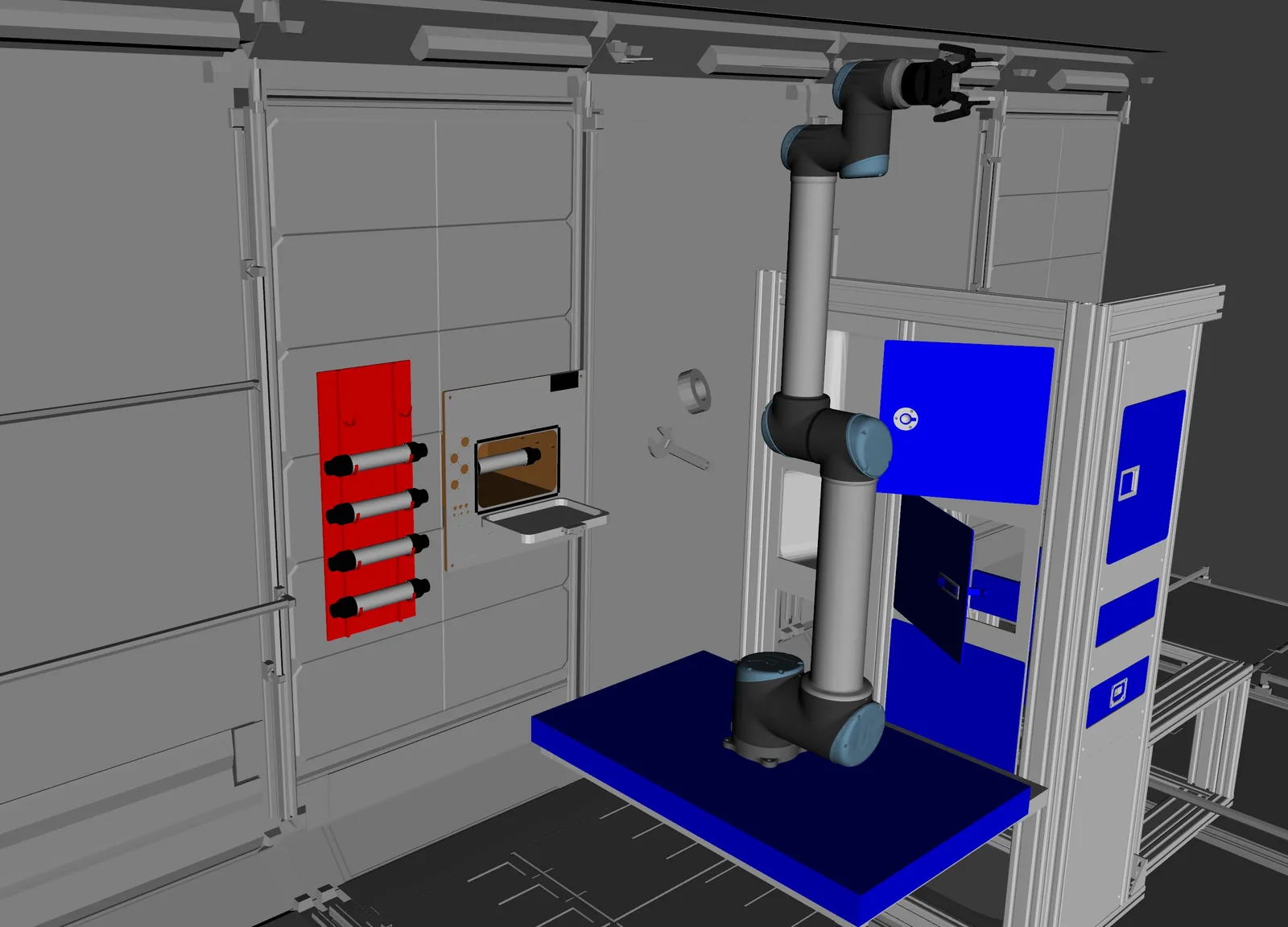
Fault in BioSim → Daphne-AT diagnosis with operator approvals → PRIDE procedure → robot inspection and repair → telemetry back to nominal
Research Posters and Presentations
Recent Conference Presentations:
- 2025 NASA HRP IWS: "Development of a Physics-Based Diagnosis Model and Digital Twin Simulation of a Space Habitat for End-To-End Autonomous Anomaly Resolution" - Galveston, USA, January 2025
- 2025 NASA HRP IWS: "Bayesian Network Approach to Collaborative Anomaly Diagnosis in Human-Agent Environments" (Co-authored) - Galveston, USA, January 2025